Saturday, March 7, 2009
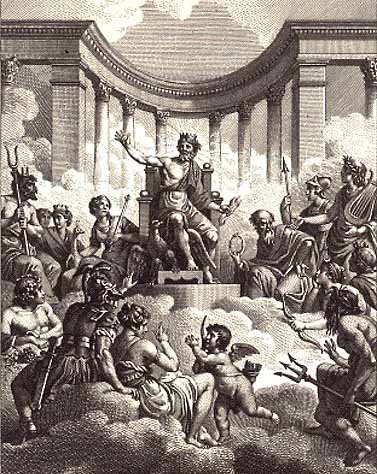
Roman and Greek Pantheons
Friday, February 27, 2009
Ancient Roman Art
Tuesday, December 9, 2008
Final Exam Questions
2.) What were some features that both the Persian and Assyrian Empires had in common?
3.) In the city-states of Ancient Mesopotamia, the economy was based on: ( ) plus ( ) and industry.
4.)Who divided the Persian Empire into satrapies, or pronvinces?
5.)Where was the site of Minoan civilization?
6.)What three factors made it possible for the emergence of civilization in Mesopotamia?
a.monotheism, cuneiforms, defensive lines
b.cities, organized governments, irrigation
c.monotheism, arranged marriages, building supplies
d.pyramids, slavery, astronomy
7.)The ( ) style of temple architecture featured slender columns with spiral-shaped capitals
a. Hellenistic
b.Doric
c.Corinthian
d.Ionic
8.)The ( ) weakened the major Greek states and destroyed any possibilty of cooperation among them:
a.Long Walls
b.The Great Peloponesian War
c.Battle of Marathon
d.Persian Wars
9.)The Athenians formed the ( ) to serve as a defensive alliance.
10.)Sparta's ( ) decided which issues to confront their assembly with.
Tuesday, November 25, 2008
Greek Architecture
There were three main styles or “orders” in Greek Architecture, which consisted of Ionic, Doric, and Corinthian. These three main designs were most commonly portrayed through the construction of Greek marble columns, which were by far the most prominent structure in their architecture. Their names were used by the Greeks and also reflected their beliefs pertaining to these styles, which descended from the Ionian and Dorian Greeks from the Dark Ages. These styles were so important that it not only made Greek art original, but played a significant role in changing art for those who preceded them. The Ionic style originally evolved in Ionia on the eastern shore of the Aegean Sea. This type of column was very elegant and had a scroll- like design, also known as a volute. Ionic columns normally stand on a base which separates the shaft of the column from the styobate, or platform. The capital of the Ionic column has characteristic paired scrolling volutes that are laid on the molded cap that springs from within it. The cap being the most elaborate detail, was usually very enriched, and just as the vital volutes lied in a single plane that was angled at the corners. This brought both uniqueness and originality to the detailed Ionic columns, which were to be admired and emulated throughout time.
The Doric “order” was the earliest style developed of the prominent three. It originated in the 7th and 8th centuries, reaching its apex in the 5th century. Because of its appearance, these columns were most commonly built on the outside of churches and public meeting places. In their original Greek version, Doric columns stood directly on flat pavement of a temple. Its exterior can be described as having parallel grooves that run from the top to the bottom of the columns. They were topped with a square- cut piece of marble that intersected with the vertical grooves.
The Corinthian column, the most elaborate of the three columns, was the most seldom used in Greek Architecture. This type of column has a ring- like molding, or banding beneath it at its base. Preceding its vertical indentions that characterize the Greek columns, it has elaborate designs at the top. Some of which included bellflowers and leaves that were decoratively carved. These detailed columns can also be seen in many prominent buildings such as the Flavian Amphitheatre and the Coliseum.
If some of these elements look familiar, it is because they have been passes in to the vocabulary of Western Architecture and form part of the basis of the style referred to broadly and known as classical. For centuries banks, museums, universities, government buildings, and churched have been built using the elements and style first designed and named by the Greeks.(Getlein 314)
The Greeks not only designed and executed the art of building beautiful columns, but also created them in such a way that has had a profound effect throughout the ages. Many of the styles have been reproduced and copied by some of what the modern day audiences would class as some of the finest architecture. Greek architecture was of great importance because the immense majority tell the timeless stories of gods, heroes, events, and the Greek culture in general. Many people even in today’s modern times copy the revered style as a sign of respect. They have depicted the famous architecture that truly changed the way art was viewed by the nations that followed.
The significance of Greek architecture as it relates to the history of Western civilization is of great importance and lasting substance. The Greeks were responsible and are to be credited with some of the most continuing themes, styles, viewpoints, and approaches to architecture that have engrained themselves throughout Western civilization.
Tuesday, November 18, 2008
Greek Art
There were many different styles of Greek art, all of which excelled and are why they are so respected. The major types include Archaic, Hellenistic, and Minoan art, as well as the Classical Period. All of these brought forth their own creative style and left a significant mark in the history of Greek art.
A prominent change would appear in the world of Greek art during the seventh century B.C., which became known as the Archaic period. The abstract geometric patterning that had controlled the art world during 1050 and 700 B.C. would be replaced in the seventh century by a more relaxed, unaffected style that would depict and show a noteworthy influence that came from the Near east and Egypt. The Kouros statues were one of the dominating features the Archaic period of art. All of the Kouros were either male or female statues that served as the promoter for their state. They were also designed in order to be decorations for the outside of religious buildings and were commonly carved out of marble. Formally, the Kouros statues that followed a carving formula that divides the human body into proportionally pleasing geometric entities. The stylization of the different figure planes, along with the rigid poses allowed the sculptor an easy way to create the human figure.(Getlein 371) This was because all he had to do was follow a well- established traditional formula in order to represent the different parts that compromise human-likeness. The Archaic period of art acted like a silent witness to the extraordinary development that took place in western society. The Kouros statues resembled a true cultural revolution.
The Hellenistic period of art expanded the horizon on dramatic posing, high contrast of light and sweeping lines. It also allowed the artist to explore in order to get inspirations from unique points of view. Different from previous styles, the importance of Hellenistic art shifted from natural and religious themes to more dramatic human appearance. It accomplished this through depicting the human figure with bold expressions and energy through the carving the images in motion- like positions. The sculptures of this period abandon the self-containment of the earlier styles and appears to embrace its physical surroundings with dramatic groupings and creative landscaping of its context.(Freeman 11) The sculptor not only wanted to depict his subjects outward appearance, but the inward emotions and attitudes. This resulted in the statue acquiring an individual personality.
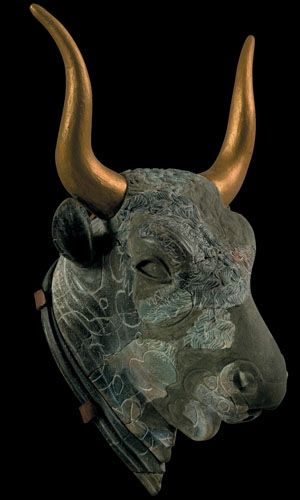
Minoan art portrays a society that was very much in touch with their environment and what has survived has afforded us great insight into the cultures and peoples that thrived in Crete. During this time, known as the Prepalatial period, many important developments were seen throughout Minoan culture that brought about a freedom to build and create in a peaceful and prosperous lifestyle. Above all, the unearthed artifacts reveal a people who had developed a high degree of self- respect and a keen eye for observing and adapting to their physical environment who had devoted insight and appreciation for the coherent order of the natural world. It would be through the Athenian vases that we would be able to witness Greek life in what is known as iconography art. (Getlein 374)These vases describe and portray Greek culture as related to funerary rites, daily life, government, athletics, warfare, religion, and mythology.
Pottery was the key item made using this style of art. The type of pottery was categorized as having thin walls, sweeping curves, and elegant spouts, along with decorations. The surfaces of the pots were usually decorated with bold lines, in which created naturalistic scenes. They rapidly became popular in areas such as Crete and Syria, and were commonly exported. Furthermore, it is through the plastered walls from the Minoan palaces and villas that we can retain a glimpse into the portrait of what life was life during this time. The Minoans were known for their “true” or “wet” panting method which allowed for creativity and naturalness which also benefited the Minoans style of movement and nature scenes that depicted their known style. An additional interest aspect of Minoan art is seen within the expression of human emotions and feelings portrayed in the faces and figures that had not been observed in the history of art prior to the Minoan culture. Because of this articulation of emotions, the Minoans were to become known as a people who were in touch with the human condition and inner world.
During the Classical Period of art, Ancient Greece produced some of the most beautiful sculptures that the world has ever seen beginning about the middle of the 5th century BC. By this time, many of the difficulties that artists had been facing in the early archaic period had been resolved, thus enabling more freedom and creativity to produce. This classic Greek style is categorized by cheerful freedom of movement and expression. Sculptors were able to replace the strict asymmetry of the figure with a free flowing form more true to life, while they approached an ideal aesthetic vision through stone and bronze. Architects transformed blocks of marble and stone into proportional realistic figures with the illusion of if they were moving through space. The sculptures were truly a demonstration of perfect proportions, values, and a newly discovered sense of freedom. Many of the works of the Greek painters have disappeared completely and we are only granted insight by way of what historians are able to tell us. From this time periods, fortunately, we have many artifacts in the form of Greek vases and the decorations on them that were left in tombs or unearthed by archeologists that portray and give us examples of what Greek painting would have looked like. They depict the true form and line that made the Greeks famous in the domain of sculpture.
Greek Art as described in the form of sculpture, vases, paintings and pottery, known as classical art, were huge contributions to the world of art and artists forever will owe a debt of gratitude to the ancient Greeks. As portrayed, each type of Greek art expressed unique style in accordance with the time period. Greeks have become renowned and seen by many as the foundation to western society’s art and ideas and encompasses a large amount of what made the Greek civilization so distinguished.
Sunday, October 19, 2008
The Mummification Process
The mummification process took approximately 70 days and had four main stages. In the first stage, priests worked as embalmers in removing all the internal parts of the body in order to prevent decay. The embalmers removed organs in the abdomen and chest region through an incision most commonly made on the left side of the abdomen. The only internal organ left is place was the heart because it was believed to be the center of a person's intelligence. The other organs such as the stomach, liver, intestines, and lungs were conserved in special containers referred to as canopic jars. These were later buried with the mummy as part of a ritual.
During the second stage of preservation, all moisture was removed from the body. This was done by applying natron, a type of salt, which had excellent drying properties. Natron packets were also placed within the body to further dehydrate the body. Once the body was thoroughly dry, the internal packets were removed and the natron was washed off the body. The result of this was a dried out human form, but still recognizable.
Within the third stage, the wrapping of the mummy began. This required hundreds of yards of linens. The embalmers executed another job in the process by winding the long strips of linen around the entire body, while also focusing on wrapping each finger separately before doing the whole hand. It was during this stage that priests placed good luck charms along with prayers and magical passages that were written upon the linens. It was also common for the priests to place masks portraying the person's face between the multiple layers of wrappings. It was after the priests secured the final cloth in place with strips of linen that they marked the completion of the mummy.
All was now ready for the funeral. It was during this phase that priests presented particular religious rituals at the entrance of the tomb. This ceremony was called the "Opening of the Mouth." It was given this name because a priest touched distinct parts of the mummy with a special utensil in order to "open" those parts of the body. This was needed in order to open the body to certain senses that were needed in the afterlife. The last part of the body to be touched was the mouth, allowing it to be open in order for it to speak and eat. The mummy was now ready for the afterlife, as it was placed in a series of coffins and positioned in a sealed burial chamber.
Why preserve the body? It was a vital belief the Egyptians that the body was a type of home for the spirit and soul. Although mummification existed in other cultures, eternal life was the main focus of all Ancient Egyptians, which meant preserving the body forever.(Brier 112) It was also the home to the afterlife, and its complexity consisted of three spirits: the ka, ba, and akh. The ka was a copy of the person that remained in the tomb and required the offerings and objects there. The ba was the soul itself and was able to come and go freely to and from the tomb as desired. The akh, most commonly translated as spirit journeyed to the underworld to the “Final Judgment" and the entrance to the afterlife. All three components were essential to the importance of Egyptian after life and mummification.
I found this to be my favorite part of Egyptian history because it was very interesting the way the Egyptians valued the preservation of bodies. They thought that the way in which the preservation was executed was crucial in them succeeding and finding pleasure in the afterlife. To assure their continued existence in the afterlife, the ancient Egyptians worked hard to find the perfect method of preserving the body.(Silverman 83) This was so important that they spent most of their lifetimes doing their best to make sure this vital step was going to be carried out properly.
Friday, October 3, 2008
Cleopatra VII
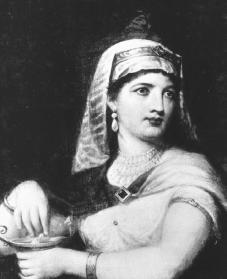
Cleopatra VII, who ruled from 51 to 30 BC, was the intelligent and politically incisive pharaoh who was born to Ptolemy XII and possibly Cleopatra V. Historians believe that she had three sisters and two younger brothers, Ptolemy XIII and Ptolemy XIV, both of which she married. By the time Cleopatra became ruler in 51 BC, her family had ruled Egypt for 251 years; Cleopatra would also be the last ruler of Egypt. During her reign she earned a less than desirable reputation, but as the lover of the Roman emperors Julius Caesar and Mark Antony, Cleopatra would go down in history as a romantic fable.
Cleopatra ruled with her father at age 19, and much like those that ruled before him, Ptolemy XII's court was plagued with violence and corruption. Cleopatra learned her political lessons from her father as she watched his embarrassing efforts to uphold the throne of Egypt through the buying of support from the powerful Romans. However, soon after doing this her father died, leaving the throne in the hands of his children, Cleopatra and her brother Ptolemy XIII. The conditions and orders were that she should marry the elder of her two brothers, which she did, and it was clear that she was the dominant, controlling force in that relationship and it was during this time that Cleopatra was driven from Egypt in 48 BC.
Despite being exiled from Egypt, Cleopatra made preparations to return to Egypt by force. But when Julius Caesar arrived in Alexandria subsequent to the Battle of Pharsalus, she perceived an opportunity to use him. It was during this process that her brother Ptolemy XIII died while fighting Caesar, which restored the throne to Cleopatra and her other brother Ptolemy XIV. The relationship between Caesar and Cleopatra, which grew from their mutual to desire for power and money, resulted in an affair in which Cleopatra bore him one son. Cleopatra longed for power in Rome, while Caesar wanted riches found in Cleopatra's court which made for an ideal association.
Based on these two covets, power and money, they came to an agreement that pleased the both of them in which he placed Cleopatra on the throne of Egypt as his mistress, while ensuring her that Egypt would not be captured by Rome. He also made certain that since he had no sons, he would choose someone from Cleopatra's own line of family to eventually become the heir of both Egypt and Rome. However, when she later went to visit him in Rome between 47 and 44 BC, she discovered that he had been assassinated under mysterious circumstances. It is commonly believed that Cleopatra herself poisoned him and it was after this that she made her son Caesarion her partner on the throne. (Silverman 38) Just as promised, the heir was chosen from her own family.
Cleopatra then summoned a meeting at Tarsus with Mark Anthony in the winter of 41 and 40 BC. It was during this time that he established a relationship with Cleopatra and because of this relationship he sent his wife Octavia to Italy with the excuse that she was pregnant. As he began to focus on planning a ritualistic marriage and making final preparations for the invasion in Parthia, his priorities changed to focusing on Cleopatra’s pregnancy. She gave birth to twins; a boy and a girl who were named Alexander Helios and Cleopatra Selene. The struggle for power between Antony and Octavian, Caesar’s heir, came to a head at Actium on the west coast of Greece on the afternoon of September 2, 31 BC with a battle at sea, when for some unknown reason Antony broke off the engagement and sailed for the open sea after Cleopatra’s ships. In spite of this, the changes in precedence caused the failure of his Parthian campaign, but Cleopatra in return supplied him with financial help that was greatly needed.
Cleopatra spent her life watching the struggle of outside forces, first Pompey against Caesar, and then the assassins of Caesar against his avenger, Antony, and then Antony against Caesar's great nephew, the future Augustus. Her will was unquenchable and opportunistic; as a ruler she was a failure, and as a military ally to Antony, a disaster. (Silverman 41)The flight of sixty Egyptian ships under Cleopatra’s command from the decisive battle of Actium not only reduced Antony’s fleet, but in their impulsive desire to get back to Egypt, broke the battle line.
It was during this campaign in the Battle of Actium that was a turning point which caused disaster for the Egyptians. Anthony and Cleopatra fled to Egypt, and Cleopatra retired to her mausoleum as Anthony went off to fight his last battle. Receiving false news that Cleopatra had died, Anthony fell on his sword. (Clayton 216) Cleopatra then buried Anthony and committed suicide. Though the means of her death remain uncertain, it is commonly believed that she went into her tomb with a basket of figs that contained asps, which were a symbol of divine royalty. The poisonous venom caused her to die at age 39 after being pharaoh for 22 years and as was their wish, Anthony and Cleopatra were buried together. Although her beauty has been fabled in literature, Cleopatra was above all things a very clever, intelligent and political woman; she had to be to captivate two such men as Caesar and Antony and endeavor to use them to preserve her kingdom. This marked the end of Egypt's last queen's reign, which left behind a legacy that will never be forgotten.
Clayton, Peter A. Chronicle of the Pharaohs: New York: Thames and Hudson Ltd., 1994.
Silverman, David P. Ancient Egypt. New York: Oxford University Press, 1997.